
In the digital world, .com has long reigned supreme. But for many entrepreneurs today, that reign comes with its frustrations:
That’s why the future belongs to alternative TLDs—like .BAR, .REST, .tech, and .xyz
In a world of saturation, these offer clarity, creativity, and branding finesse.
The Commodity Trap of .com
For years, .com has been the “default.” So much so that many businesses treat the extension as an afterthought—something automatic and unquestioned. The problem? By assuming the extension is fixed, all the pressure falls on the first part of the domain name.
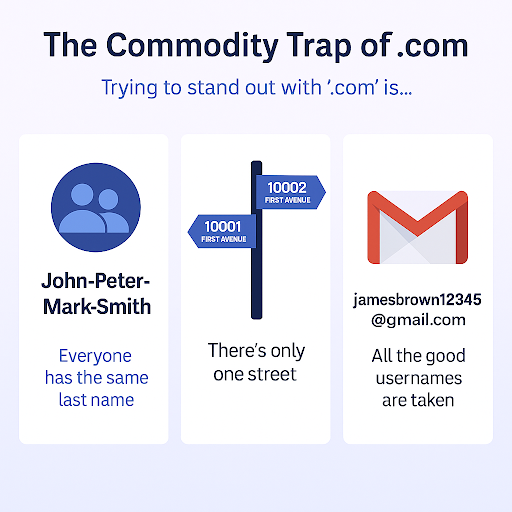
It’s a bit like living in a country where everyone shares the same last name, like Smith. To stand out, people end up with long, complicated first names—John-Peter-Mark Smith—when a simpler option could have been more memorable. Also, imagine a city with only one street: First Avenue. More people on that street means addresses become longer and longer—10001 First Avenue, 10002 First Avenue—instead of simply building new streets with names of their own.
E are sure you have tried to create a Gmail account at some point. Well, nowadays all the straight-forward addresses are already taken. You’re forced into awkward variations like jamesbrown12345@gmail.com instead of getting the clean, clear name you actually want.
That’s exactly the situation with .com. Overcrowding forces businesses into convoluted names, while the extension—always the same—is wasted space.

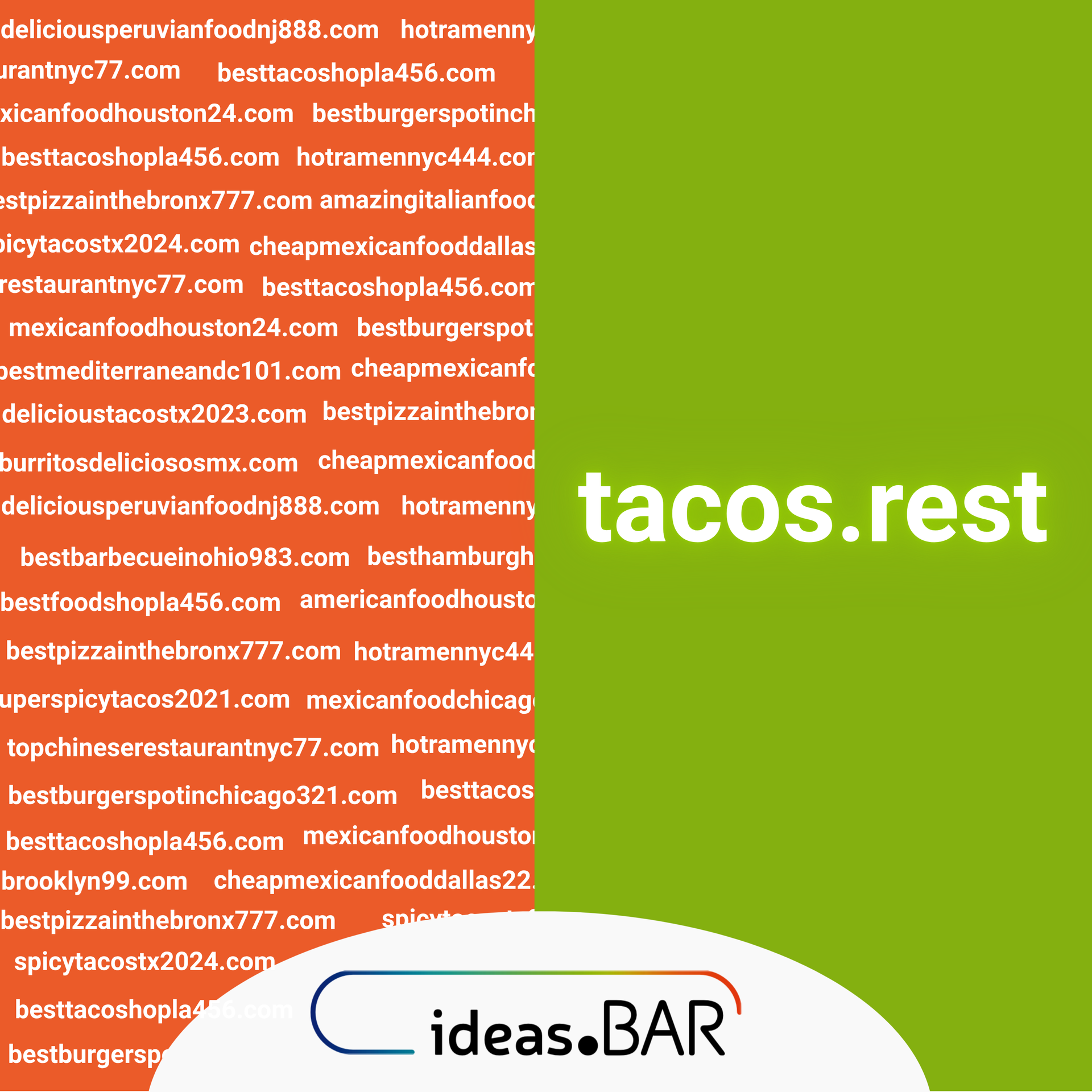
That’s why we see awkward, overloaded, and hard-to-remember addresses like:
- bestmexicanrestaurantnyc2024.com
- johnsmithconsultinggroup.com
These domains stretch longer and longer, losing clarity and punch. The extension becomes invisible, wasted and so hard to remember or type them right.
A Smarter Approach: Making the Extension Work for You
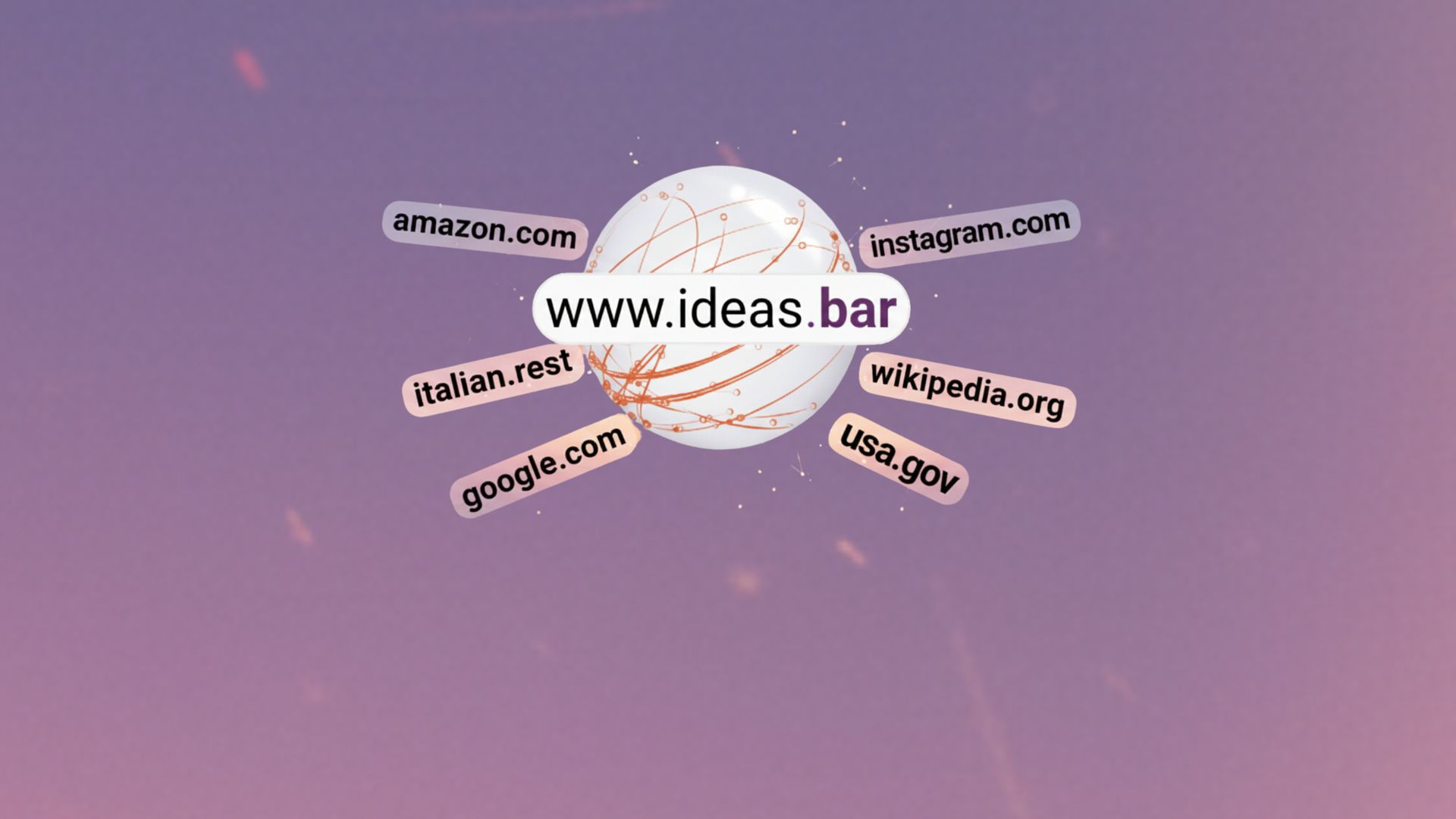
With new TLDs, you’re no longer limited to stuffing everything into the “name” part of your domain. Instead, you compose the whole domain as part of your branding.
- Instead of mezcalbar.com, you get mezcal.bar.
- Instead of fastcasualrestaurant.com, you have fresh.rest.
This approach unlocks shorter, cleaner, more memorable names—while turning the extension itself into a
brand signal. Rather than wasting half your domain on a commodity .com, you make every letter count.
Why .com Is No Longer Enough
Scarcity: Short, meaningful .com domains? Growing rarer and more expensive by the day.
Generic Impact: A name like yourbrand123.com doesn’t compel or resonate.
Brand Overload: Too many players crowding the .com space, making differentiation harder.
The Rise of Alternative TLDs
A seismic shift is underway among modern startups and digital-first ventures. According to data from Identity Digital, non-traditional TLD usage has surged by 50% in the past five years, while dominance of legacy options like .com has dropped 28%. Now, more than half of new startups are launching with domains beyond .com—and that trend shows no sign of stopping.
This shift signals growing confidence in alternative TLDs—not just for availability, but for strategic branding and positioning.
What Alternative TLDs Bring to the Table
- Clarity & Relevance: Extensions like .BAR or .REST instantly tell your audience what you’re about—even before they click.
- Creativity & Memorability: More than generic, these TLDs double as brand statements. They’re short, clever, and sticky.
- Brand Alignment: A domain name that says what your product is—like mezcal.bar or tapas.rest—feels tailored by design, not patched together.
- Resale Value: These domains are assets, not just addresses. When the right one hits the market, it’s your brand’s opportunity to make a lasting digital mark.
The Full Picture, in Numbers
Yes, many may be familiar with alternative TLDs, but most are not aware of what they are, how long they have been “a thing” and just how very present they are on the Internet. According to several domain watchdogs, .com has been the king of the internet, but its dominance is slowly declining. In 2024:
- .com accounted for 39% of all registrations (3,661,899 domains). While still significant, this represents a slight drop from 39.9% in 2023.
- Non-dot-com TLDs collectively made up 61% of registrations, totaling 5,730,594 domains.
Why the shift? Businesses and creators are exploring alternative TLDs that better represent their identity. From .shop for e-commerce to .me for personal branding, non-dot-com options allow users to craft unique, memorable domains. This shows that there is a maturity on the domain conscience and that diversity and creativity are sought after, as well as purpose driven domains making it clearer for people and companies to stand out bold and clear.
The Bright Future of .BAR & .REST
While alternative TLDs continue to gain traction, .BAR and .REST stand out for their universal appeal in hospitality, entrepreneurship, and beyond. Whether in your mother tongue or across borders, these domains are globally intuitive, instantly evocative, and deeply brand-friendly.
A Smarter Domain Future
The future of domains isn’t about shrinking addresses—it’s about expanding identity. It’s about choosing names that:
- Tell your story instantly
- Convey professionalism
- Energize your marketing
- Live in the memory
If your brand deserves clarity, creativity, and relevance, it’s time to step beyond .com and explore the next generation of domain potential.
Sources:
(https://www.nominus.com/blog/com-still-rules-in-2025 )
(https://webhosting.today/2024/12/16/the-rise-of-alternative-tlds-and-key-industry-trends-namecheaps-2024-domain-insights )
(https://www.identity.digital/newsroom/the-rise-of-non-traditional-domains-in-tech-startups )
Latest posts